
 Prototype
Ascendance
ATEA
STERNA hybrid; fan-in-wing + tractor/pusher
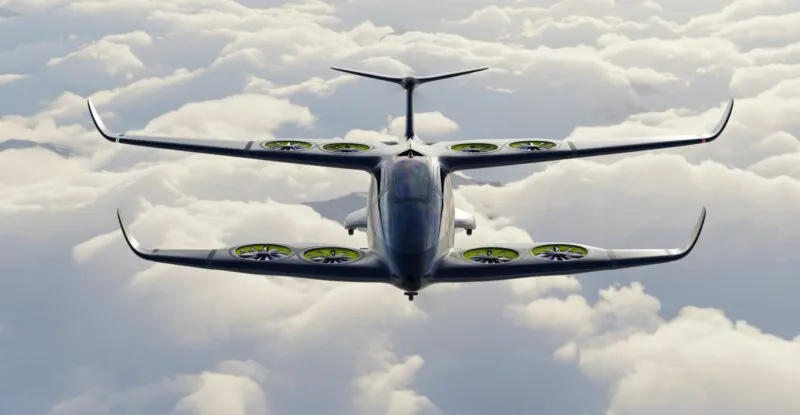
Toulouse-based Ascendance's ATEA is a hybrid-electric VTOL for a pilot and four passengers, also offered for cargo, medical and surveillance missions. Its STERNA system uses the battery for take-off and landing and burns Jet-A1 or SAF in cruise, so it is not all-electric. Eight rotors buried in the wings provide lift, and nose and tail propellers push it forward, with no tilting parts. Ascendance quotes 400 km with four passengers (350 km plus a 30-minute reserve), up to 900 km with two, and a 15-minute turnaround. Subscale prototypes have flown since 2018. The 1:1 prototype was in final integration in April 2026, with a manned first flight targeted for 2026 and certification in 2029. Speed, payload and price are not published.
- Range
- 400 km with 4 passengers (350 km + 30 min reserve)
(varies with speed, reserves, and how the pilot flies the mission).
- Payload
- Not published
- Cruise
- Not published
(chosen by the pilot, and traded against range and endurance).
- Top speed
- Not published
- Flight time
- Not published
(varies with the speed the pilot selects and the reserves kept for the mission).
- Price
- Not published
- Seats
- 4 + pilot
- Battery / fuel
- Hybrid-electric (STERNA): burns Jet-A1 or SAF in cruise; battery for take-off and landing; not all-electric
- Charge
- 15 min turnaround (Ascendance claim); plug-in, can also recharge in flight
- First flight
- Not yet flown at full scale (1:1 prototype in final integration; manned first flight targeted 2026); subscale prototypes flying since 2018
- Entry into service
- After certification, targeted 2029 (Ascendance target)
Full figures
- Seats
- 1 + 4
- Range
- 400 km with 4 passengers (350 km + 30 min reserve); up to 900 km with 2
- Powertrain
- STERNA hybrid-electric; battery for take-off/landing, Jet-A1 or SAF (later hydrogen) for cruise; plug-in, in-flight recharge
- Layout
- 8 rotors embedded in the wings for lift; nose and tail propellers for cruise; no tilting rotors; VTOL and CTOL
- Turnaround
- 15 min (Ascendance claim)
- Claims vs helicopter
- up to -80% fuel burn, -50% direct operating cost, -75% noise
- Development
- subscale prototypes flown since 2018; 1:1 prototype airframe built 2025, in final integration (Apr 2026); manned first flight targeted 2026
- Certification
- targeted 2029 (Ascendance target)
For
- 400 km with four passengers — hybrid range the pure-electrics do not match
- 15 min turnaround (claimed) and in-flight recharging, so no big chargers needed
Against
- Burns jet fuel or SAF: hybrid, not all-electric
- Full-scale prototype not yet flown; speed not published